Thank you for visiting the AUSTRALIA HP Store
-
Contact Us
CONTACT USCall us
- Sales (Home, Students, Gamers)
- 1300 540 516
- Sales (Small Business Customers)
- 1800 891 209
- Post-Sales
- 13 23 47
- Technical support
- 13 10 47
Exc. public holidays
Chat with us- Our specialist are here to help
- Live Product Demo
- Sales
- 61288061500 (WhatsApp)
-

- Post Sales
- 61288061700(WhatsApp)
- Technical Support
- 61341594000(WhatsApp)
Exc. public holidays
Live product demo
Submit feedback We value your opinion! - My Account

Search
Monthly Archives: November 2023

-
Posted: November 08, 2023
 Read more »In the modern workplace, where many of us are adapting to remote or compact environments, the tools we employ can have a significant impact on our productivity. Among these tools, the computer monitor stands as one of the most critical pieces of the puzzle. It's not merely about screen size and resolution, it's about finding a monitor that aligns perfectly with your specific needs, ensuring a balance between functionality, space-saving design, and enhanced work efficiency.
Your computer monitor is more than just a screen, it acts as a window into your digital space, shaping your work experience. It's essential that it not only offers visual capabilities but also incorporates ergonomic design to ensure the comfort and effectiveness of your workspace, including features to reduce eye strain such as blue light protection and HP's Eye Ease feature.
In this article, we’ll help you choose the ideal HP monitor for your small workspace. We'll demystify the world of monitors, focusing on the key -
Posted: November 08, 2023
 Read more »A mini workstation packs all the bells and whistles of a full-fledged workstation in a much tinier form factor. This way, you can carry high-performance workstation computing for seamless 3D animation, video editing and graphic design wherever you go.
The HP Z2 Mini G9 Workstation is a powerful solution for professional computing needs and can serve a variety of engineering, creative and business workflows in the blink of an eye, thanks to its ultra-fast processor and graphics specs.
In this comprehensive HP Z2 Mini G9 review, we’ll take a look at the system and see what makes it a vast improvement over the previous Z2 Mini generation. We’ll also see how pro users can make the most of this feature-packed machine that’s built to last.Designed for performance from the ground up
Every aspect of the HP Z2 Mini G9 Workstation is optimised for uncompromising performance in a space-saving design. Measuring just 211 x 218 x 69 mm and weighing merely 2.4 kg, the entire system can be single-handedly -
Posted: November 08, 2023
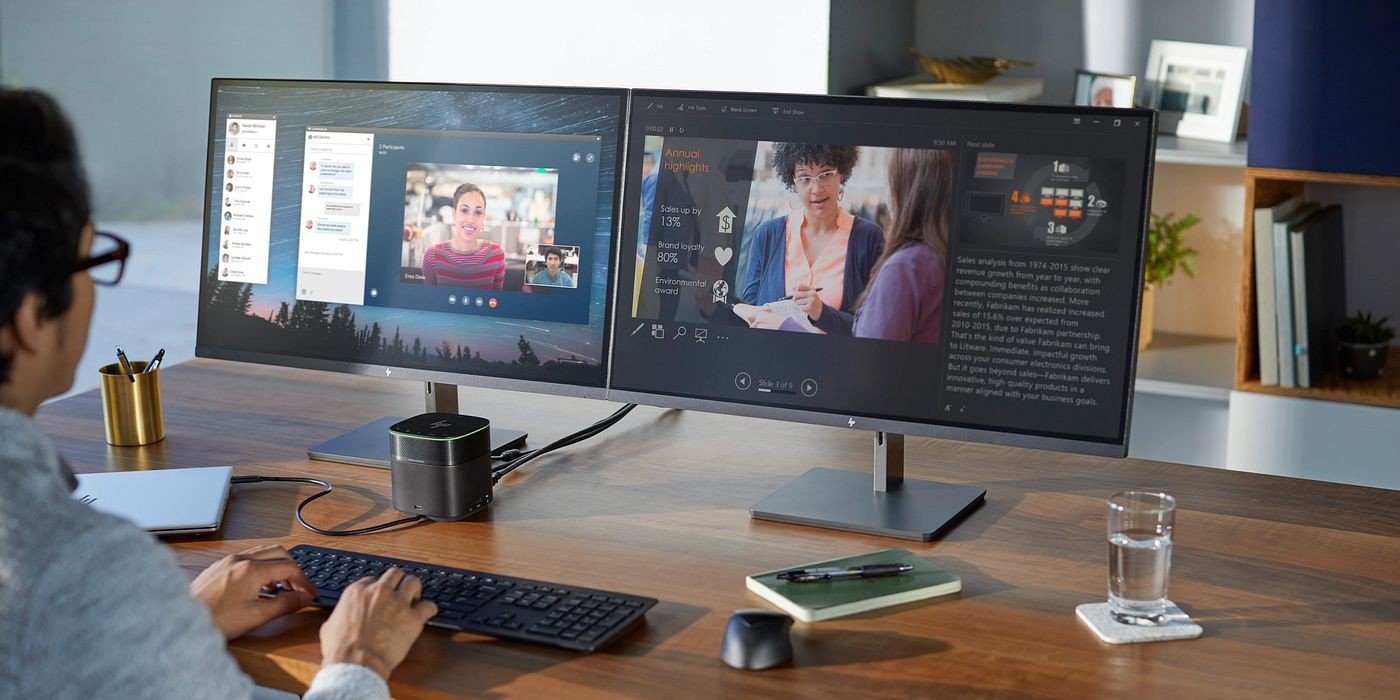
 Read more »The hybrid work model has brought about a paradigm shift where flexibility is the new cornerstone of work as the lines between traditional office spaces and home workstations get continually blurred. The hybrid worker needs versatile systems that can seamlessly plug in wherever they are for seamless connectivity.
In this dynamic landscape, a docking station emerges as an innovative solution to connectivity challenges. In this article, we’ll take a look at the realm of docking stations for laptops, and see how they can be an invaluable asset in revolutionising the hybrid work experience.A peek into the new hybrid work landscape
No longer are traditional offices the only spaces that define what it means to work and execute business. The new hybrid model of work recognises that not all work tasks are the same and therefore can benefit from execution in specialised environments for the best results.Understanding remote work and office dynamics
The hybrid work model entails workspaces where -
Posted: November 08, 2023
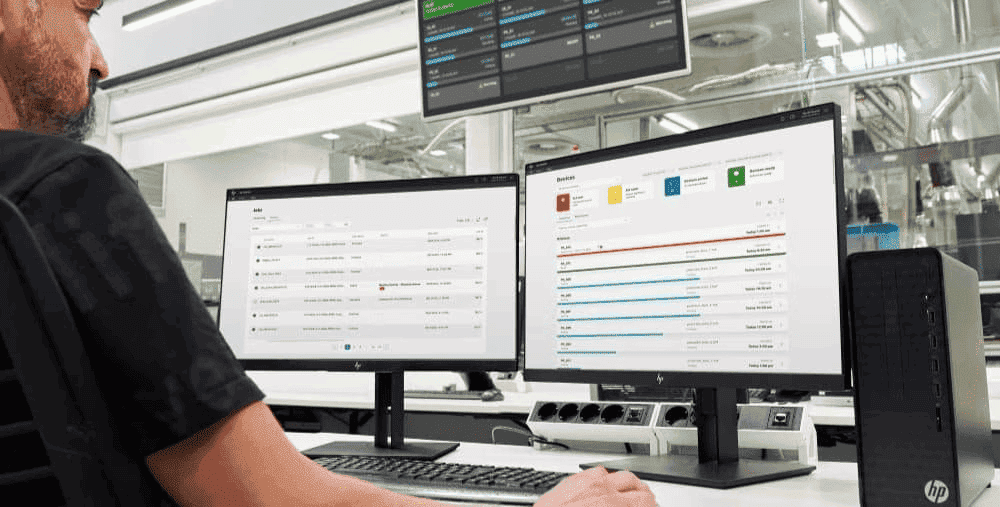
 Read more »Small businesses are the backbone of any economy, yet they face significant challenges every single day. As the pressure to accommodate more assets in extant workspaces increases, it becomes imperative to make optimal use of space. HP slim desktops deliver reliable performance, secure computing environments and streamlined workflows, all in a compact form factor, making them invaluable for micro-enterprises.
In this article, we’ll take a look at the best slim desktop PCs that can bring a truly transformative change to businesses’ everyday operations and productivity. We’ll examine their specifications in detail and see what makes them ideal for a variety of business use cases.Why should you choose HP slim desktops?
With so many desktop models available for business uses, it can indeed be a daunting process zeroing down on the best system for your specific needs. HP slim desktops are unique with their space-saving design, power-packed features and toughened security inside out. Let’s take -
Posted: November 07, 2023
 Read more »
Factors to consider when choosing a monitor
When choosing a monitor for the small business context there are a few factors to take into consideration. The importance of each will vary depending on the type of work your business engages in.Screen size and resolution
Keeping it simple, screen size is how big the display is while resolution is how many pixels there are.
A smaller screen allows for a more compact workstation and greater flexibility in the layout. It’s generally more budget-friendly, but going too small can cause squinting and headaches. While a larger screen can be more expensive, it’s easier on the eyes and gives rise to the opportunity to multitask by having multiple programs open and visible at once.
When it comes to resolution, lower-resolution screens are generally cheaper and work well with older or less powerful graphics processors. The downside is you lose visual clarity which may be important in an industry involving the use of high-quality images, videos and graphics.
Recent Posts


Popular Posts







Products purchased through this store are sold and fulfilled by Ingram Micro Pty Limited

CONTACT US
Call us
- Sales (Home, Students, Gamers)
- 1300 540 516
- Sales (Small Business Customers)
- 1800 891 209
- Post-Sales
- 13 23 47
- Technical support
- 13 10 47
Exc. public holidays
Chat with us
- Our specialist are here to help
- Live Product Demo
- Sales
- 61288061500 (WhatsApp)
-
- Post Sales
- 61288061700(WhatsApp)
- Technical Support
- 61341594000(WhatsApp)
Exc. public holidays
Live product demo
Submit feedback
We value your opinion!