Thank you for visiting the AUSTRALIA HP Store
-
Contact Us
CONTACT USCall us
- Sales (Home, Students, Gamers)
- 1300 540 516
- Sales (Small Business Customers)
- 1800 891 209
- Post-Sales
- 13 23 47
- Technical support
- 13 10 47
Exc. public holidays
Chat with us- Our specialist are here to help
- Live Product Demo
- Sales
- 61288061500 (WhatsApp)
-

- Post Sales
- 61288061700(WhatsApp)
- Technical Support
- 61341594000(WhatsApp)
Exc. public holidays
Live product demo
Submit feedback We value your opinion! - My Account

Search
monitors

-
Posted: March 14, 2024Categories: Monitor
 Read more »A high-quality monitor is like a gateway to new worlds and exciting experiences. It's the canvas on which gamers battle and conquer, movie buffs journey through cinematic landscapes, and professionals and creatives bring their visions to life. A computer screen is all about displaying images and creating an immersive experience that captivates and engages.
 -
Posted: March 08, 2024
 Read more »
Colour accuracy is vital in fields where precise colour representation is critical, such as graphic design, photography, or any profession requiring true-to-life colour depiction. Understanding and optimising your monitor's colour settings are essential steps in this process.
Accurate colour portrayal in visual media is key to ensuring that the final output, whether a printed design, photograph, or video, is presented as intended. This level of accuracy enhances the aesthetics of your work and bolsters its credibility and effectiveness in delivering the intended message or visual experience.
The setup of your monitor plays a significant role in colour display. Without proper calibration, your monitor may present inaccurately warm or cool, overly saturated, or unbalanced colours, leading to a mismatch between what you see on the screen and the final product. In this article, we aim to assist you in achieving optimal colour accuracy to ensure the quality and consistency of your work.
Preparing
-
Posted: January 09, 2024Categories: Monitor
 Read more »
Having a gaming monitor with the right specs for you can easily and instantly enhance your gaming experience. It doesn’t matter whether it’s for PC or console, playing in high resolution with a fast refresh rate, vibrant colours and speedy response times can help take things to the next level.
We’re going to run you a carefully curated selection of the top HP gaming monitors and give you a few things to think about when considering which monitor is right for you.
HP gaming monitor lineup
Diving straight into it, here are four specialised gaming monitors currently on offer from HP.
OMEN 24 Gaming Monitor

Let's start at the smaller end of the scale with the 23.8-inch OMEN 24 Gaming Monitor. This budget-friendly option has a 1920 x 1080 Full High-Definition (FHD) screen with a 165 Hz refresh rate. The in-plane switching (IPS) panel is accurately viewable across 178 degrees and can display 99% sRGB, enabling it to precisely recreate the game's colours. It has a
-
Posted: December 01, 2023Categories: Monitor
 Read more »
Professional photographers and designers need more than a high-quality camera to create beautiful, rich, and striking visuals. Photo editing is integral to image processing as it increases colour accuracy, enhances clarity, and fixes contrast. Editing can help salvage otherwise mediocre or poor shots, but you require the right tools that are up for the task.
Using the right monitor meant for photo editing can help produce exactly the end result you want. Unlike regular PC monitors, professional photo editing monitor displays have a wider colour spectrum and panel specifications to ensure higher colour accuracy, better viewing angles, and optimised calibration. Whether you are a professional or a photography enthusiast, a quality photo editing monitor is essential to master your craft.
In this article, we will discuss the different specifications and factors to consider when choosing a photo editing monitor, list some of the best HP monitors for photo editing and offer tips on enhancing
-
Posted: November 08, 2023
 Read more »In the modern workplace, where many of us are adapting to remote or compact environments, the tools we employ can have a significant impact on our productivity. Among these tools, the computer monitor stands as one of the most critical pieces of the puzzle. It's not merely about screen size and resolution, it's about finding a monitor that aligns perfectly with your specific needs, ensuring a balance between functionality, space-saving design, and enhanced work efficiency.
Your computer monitor is more than just a screen, it acts as a window into your digital space, shaping your work experience. It's essential that it not only offers visual capabilities but also incorporates ergonomic design to ensure the comfort and effectiveness of your workspace, including features to reduce eye strain such as blue light protection and HP's Eye Ease feature.
In this article, we’ll help you choose the ideal HP monitor for your small workspace. We'll demystify the world of monitors, focusing on the key -
Posted: November 07, 2023
 Read more »
Factors to consider when choosing a monitor
When choosing a monitor for the small business context there are a few factors to take into consideration. The importance of each will vary depending on the type of work your business engages in.Screen size and resolution
Keeping it simple, screen size is how big the display is while resolution is how many pixels there are.
A smaller screen allows for a more compact workstation and greater flexibility in the layout. It’s generally more budget-friendly, but going too small can cause squinting and headaches. While a larger screen can be more expensive, it’s easier on the eyes and gives rise to the opportunity to multitask by having multiple programs open and visible at once.
When it comes to resolution, lower-resolution screens are generally cheaper and work well with older or less powerful graphics processors. The downside is you lose visual clarity which may be important in an industry involving the use of high-quality images, videos and graphics. -
Posted: February 20, 2023Categories: Laptops
 Read more »
The technology used in computer monitors has changed dramatically over the last decade. It’s now possible to find laptops and displays that feature incredibly dynamic screens, and you don’t have to pay an exorbitant amount for them. Also, we’re all spending more and more time on our devices, so it makes sense that we want our displays to help make our experience better.
This is why many consumers are choosing to purchase OLED (organic light-emitting diode) technology. While LCD screens were the norm for many years, the tech has improved enough that screens can now make their own light, allowing for better graphics and crisper images.What is an OLED laptop?
An OLED laptop is a device that relies on organic material (carbon and hydrogen) in order to create light. The tech uses positive and negative layers in order to create a current. There is an emissive layer that absorbs electrons, while the conductive layer creates holes. This leads to particles of light, or photons, that work with colored
-
Posted: February 15, 2023Categories: Monitor
 Read more »
Smartphones, computers, and television are as popular as ever, so it’s no wonder why there have been so many amazing developments in display technology over the last decade. AMOLED is one of the newest breakthroughs.
What exactly is an AMOLED display, and why should you get one? Let’s answer your questions. An AMOLED display is a modified version of an OLED display, which begs the question: what is an OLED display?
What’s an OLED display?
OLED stands for “organic light-emitting diode.” Here’s how an OLED display works. Each pixel is composed of three things: a tiny light, a liquid crystal, and a color filter.
A liquid crystal is a chemical substance that contains properties of both a liquid and a solid. When the liquid crystals assume their liquid form, they block light from passing through. But light can pass through a liquid crystal when it’s in a solid form because the solid is less dense.
Liquid pixels basically work as an aperture. When a pixel needs to display a certain color, an
-
Posted: December 21, 2022Categories: Monitor
 Read more »
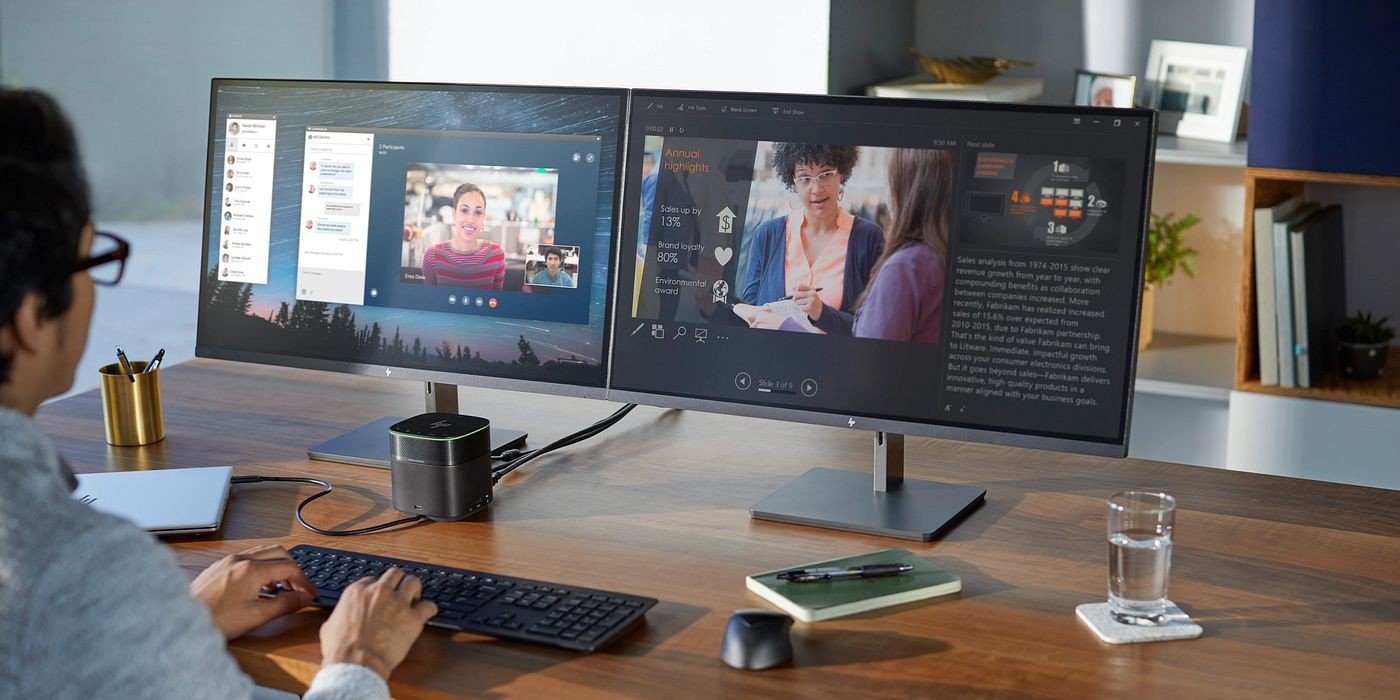
If you’re unfamiliar with the term, a dual-monitor setup includes two computer monitors. One functions as either an expansion or duplication of the other monitor. We’ll get to the specifics of setting up your dual monitors in a second.
-
Posted: November 22, 2022Categories: Monitor
 Read more »
Today’s computer monitor comes with a variety of port options, all of which have different functions and use cases. And when it comes to buying a new monitor, you’ll want to know exactly which ports are included in your latest device.
Recent Posts


Popular Posts







Products purchased through this store are sold and fulfilled by Ingram Micro Pty Limited

CONTACT US
Call us
- Sales (Home, Students, Gamers)
- 1300 540 516
- Sales (Small Business Customers)
- 1800 891 209
- Post-Sales
- 13 23 47
- Technical support
- 13 10 47
Exc. public holidays
Chat with us
- Our specialist are here to help
- Live Product Demo
- Sales
- 61288061500 (WhatsApp)
-
- Post Sales
- 61288061700(WhatsApp)
- Technical Support
- 61341594000(WhatsApp)
Exc. public holidays
Live product demo
Submit feedback
We value your opinion!