
Workers' relationship with AI has developed and matured. Daily use has risen from 31% of workers in 2025 to 39% in 2026, and proficiency appears to build confidence.
As workers move from Basic/Novice to Proficient/Expert use, confidence in knowing where AI ends and human judgment begins rises from 52% to 78%. Belief that AI will reshape daily life over the next five years also rises, from 53% to 73%. For many workers, AI fluency is becoming a way to take greater ownership of their future.


Increasingly, workers are viewing AI as a central engine of adaptation, a way to regain control in the workplace and build critical skills to support the development of their careers


Those with a healthy work relationship are more likely to be advanced users of AI agents than those in the Critical Zone (52% vs. 38%). Conversely, Critical Zone workers are more than twice as likely to report no AI use (15% vs. 7%).
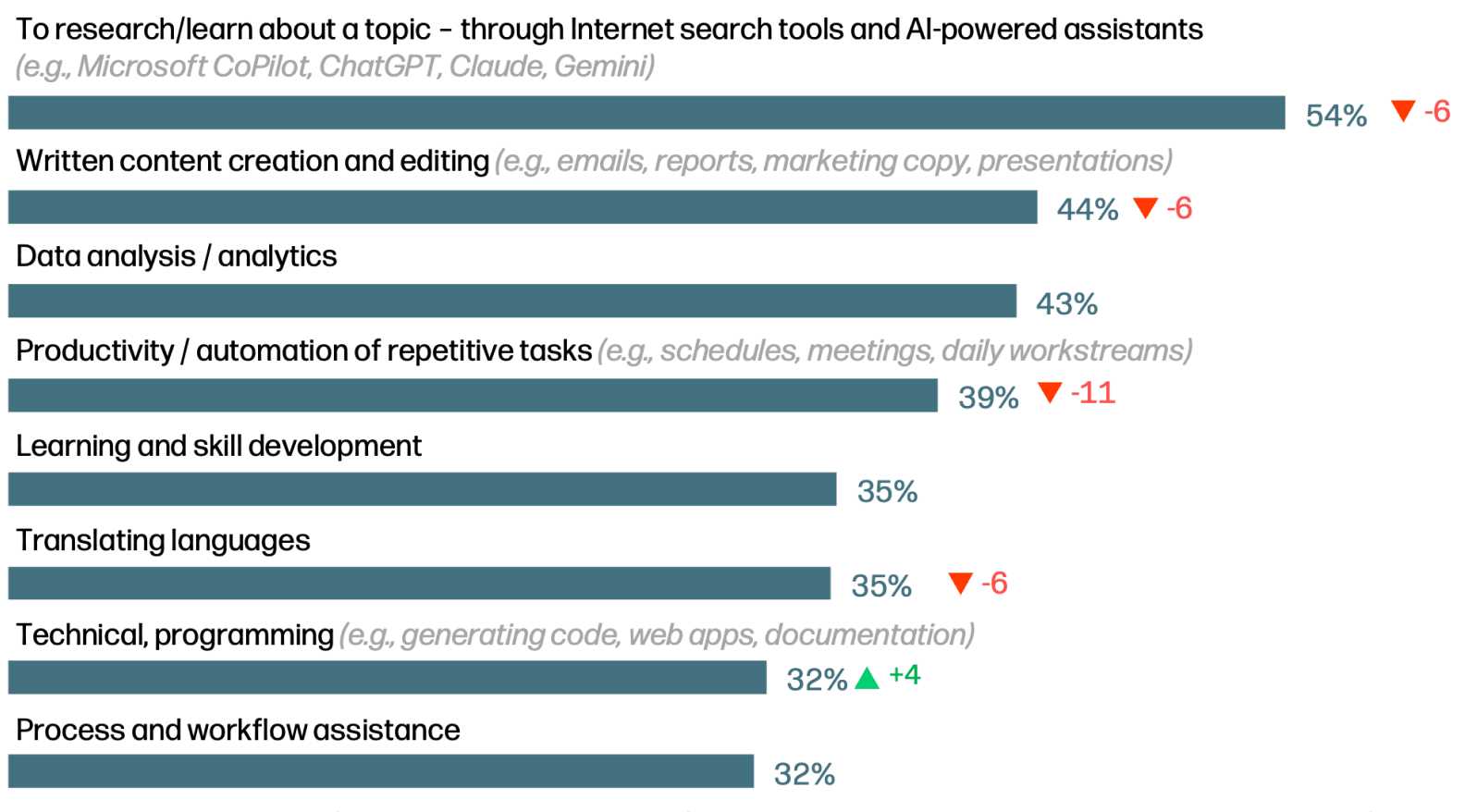
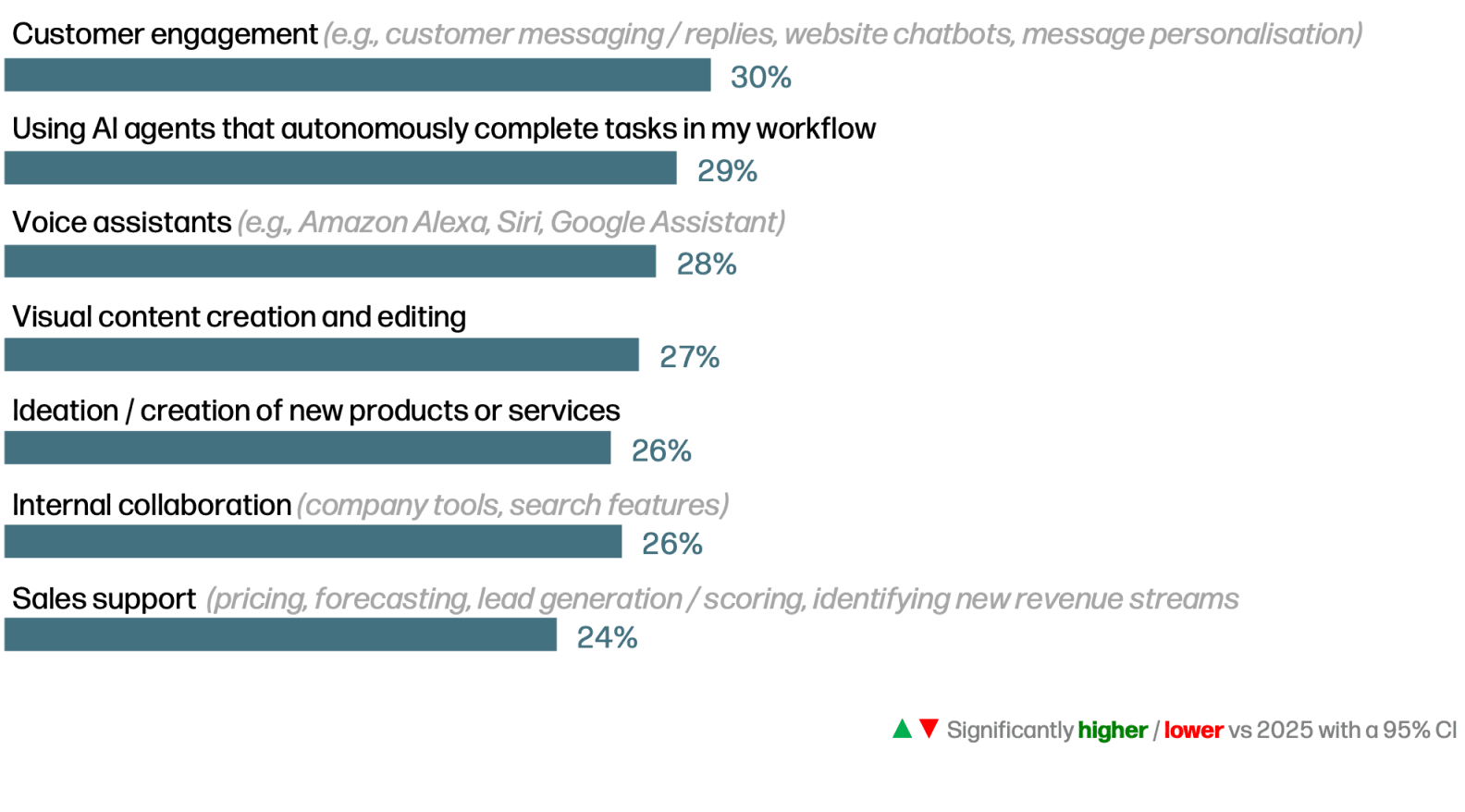
Increased proficiency brings with it expanded use cases for AI: workers are moving beyond using AI for basic research tasks and increasingly embedding it into core workflows. The data shows that breadth of usage expanded rapidly year-on-year.
(Among daily users of AI at work)
In which of the following ways do you currently use AI at work?
Human skills remain a differentiator, even as Al rapidly evolves to take on more tasks.

% Using AI to help with a work task or question
47% of Business Leaders and 43% of ITDMs say they usually rely on AI first, or always rely on it, before asking a colleague for help, compared with 31% of Knowledge Workers. Leadership and technical roles are furthest along in treating AI as a genuine first point of inquiry, ahead of the broader workforce.
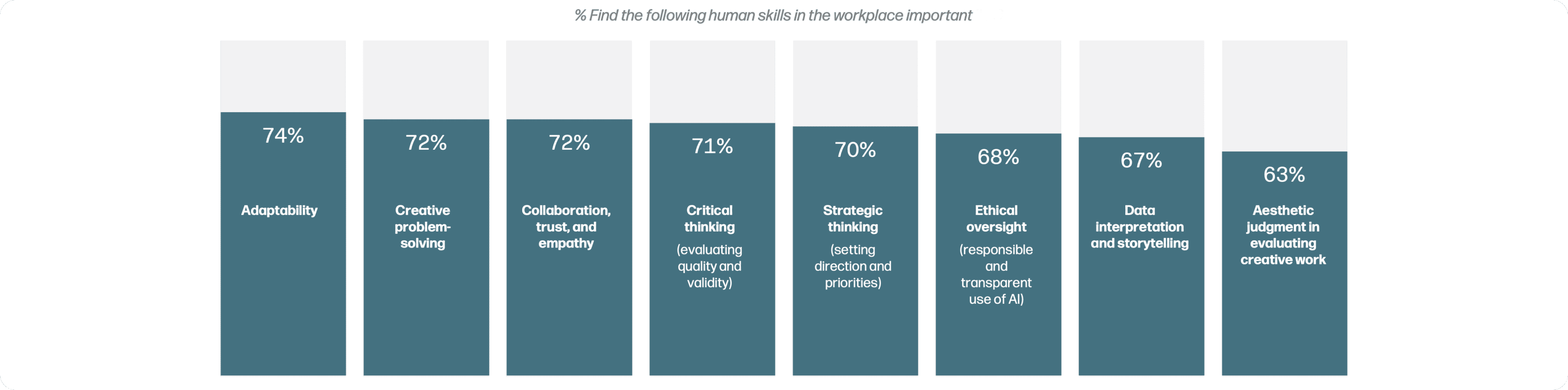
% agree on the importance of human skills
Increased AI usage has prompted workers to rethink the types of skills they need to be investing in to equip themselves for success in the workforce of the future. Adaptability ranks highest at 74%, followed by creative problem solving and collaboration at 72% each. Critical thinking, strategic thinking, and ethical oversight are also important, reinforcing that working with AI requires both technical confidence and human judgment.

As AI proficiency increases, workers are coming to understand the technology’s potential to build flexibility and resilience.
This is enabling them to find new ways to leverage AI for business success, amplifying the importance of both AI execution and the value of human judgment, creativity, and collaboration.