
HP, for your best work on Earth and beyond.
250 miles above Earth, astronauts on the International Space Station (ISS) begin their day in one of the most demanding workplaces.
With an average mission duration of six months, they have limited time to conduct experiments, run simulations, and analyze data that can lead to breakthroughs in science, health, and technology. Every experiment, every system check, every line of communication matters.
On the ground, NASA’s Mission Control is just as critical for mission success. Electrical, mechanical, and aerospace engineers oversee missions and simulation, while guidance and navigation teams receive and relay information.
When the stakes are this high, the tools can’t afford to fail. In space, just like on Earth, technology is the engine of employee experience.

HP workstations are the primary compute platform on the
International Space Station
100
HP workstations
are in active use onboard
20
additional HP workstations
are sent as backup
50+ years of collaboration
For more than 50 years, HP technology has played a role in some of NASA’s most ambitious work

1968: Early mission support

1969: A signal from the Moon
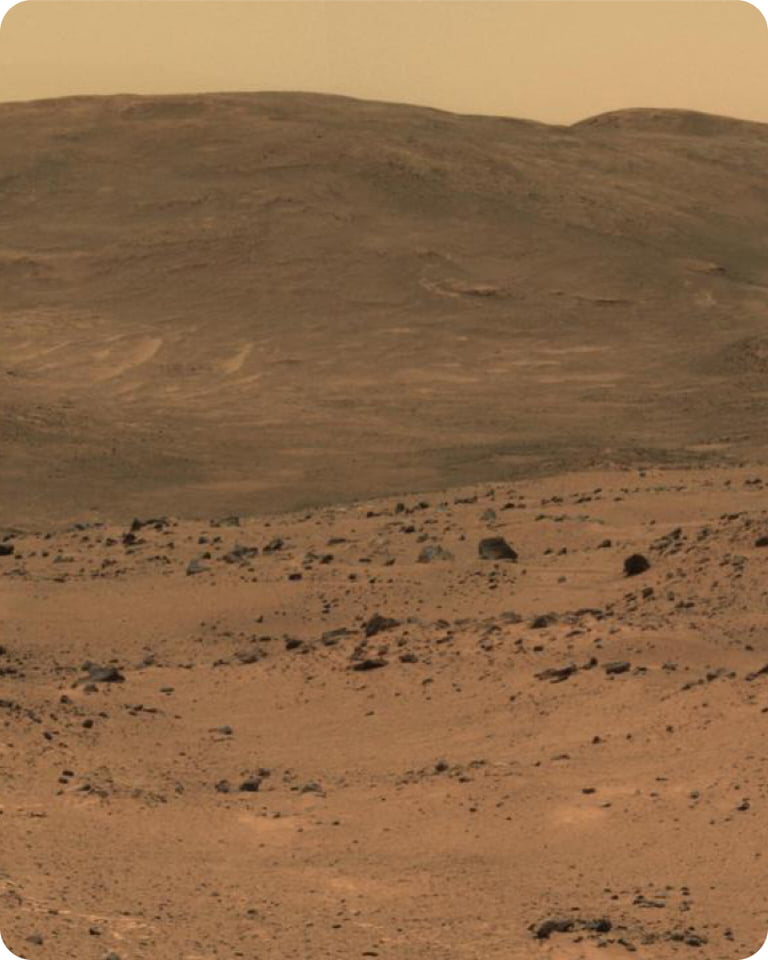
2001: Early images of Mars

2014: Launched to low-Earth Orbit
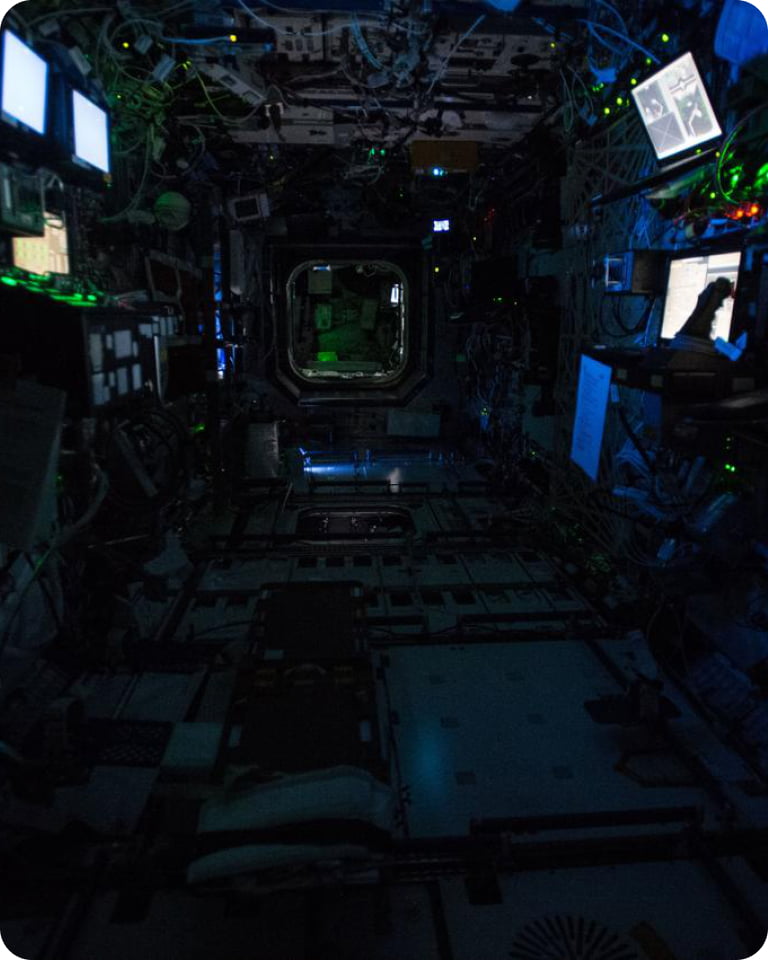
2016: Modernizing ISS compute
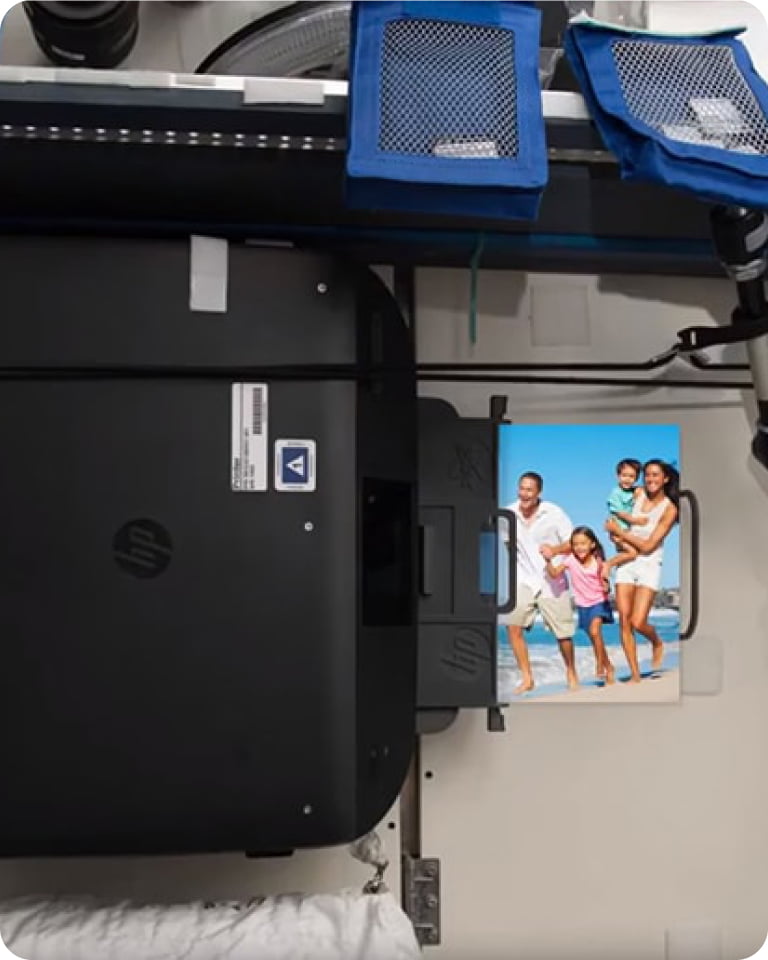
2018: The printer that defied gravity
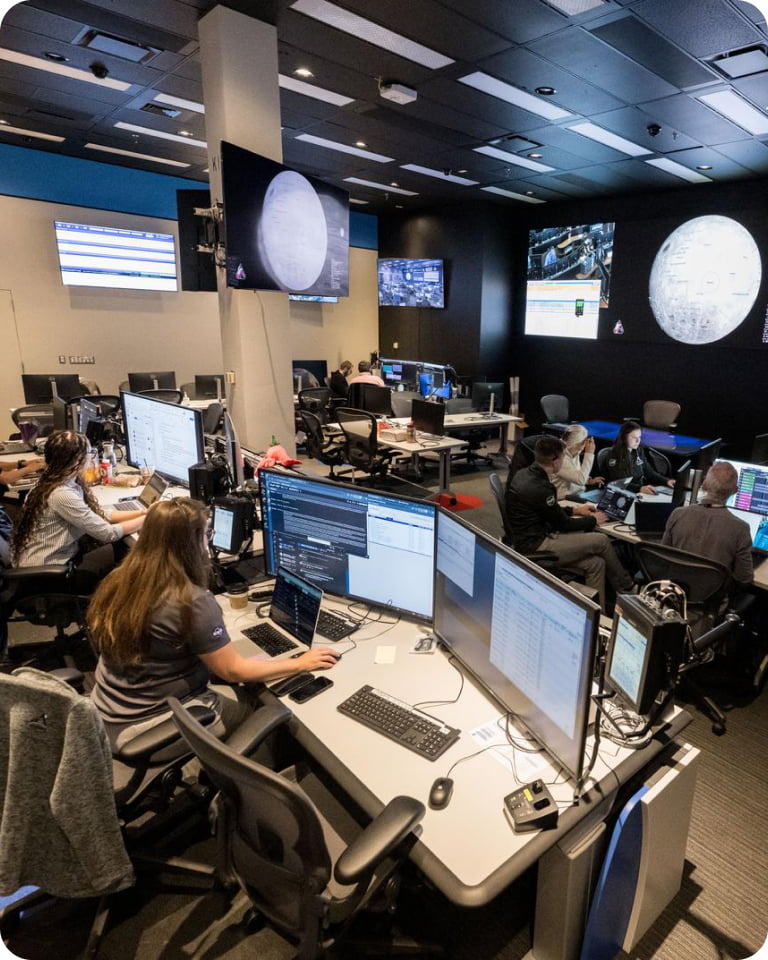
2024: Powering Mission Control

2025: The next generation
As humanity enters a new era of space exploration, where returning to the Moon paves the way to Mars, HP remains committed to delivering growth and fulfillment through technology - so we can enable teams to continue to push the limits of what’s possible in space and human achievement.
Operational proof
Systems built for moments that can’t go wrong.
Inside Mission Control, the pressure is immediate. Electrical, mechanical, and aerospace engineers perform predictive analysis and troubleshoot systems like environmental control, while aerodynamics and physics experts calculate and analyze data that supports guidance and navigation.

The pressure
NASA teams operate on critical missions where technology must perform without interruption. Downtime isn’t an option. Equipment must be trusted and reliable for the most pivotal moments.

The system
Many of the HP workstations in Mission Control have run 11-12 years with minimal failures, providing mission-grade compute across consoles. They support applications from modelling and simulation to processing data that keeps missions safe and on track.

The enterprise translation
On Earth or in space, downtime costs time, trust, revenue, and safety. Building on standardized, durable infrastructure can reduce operational risk at scale. Reliability becomes a strategy, enabling teams to focus on the decisions that matter, rather than the tools they depend on.

HP Z Workstations:
Up to 11-12
years of use in Mission Control.
1,000+
deployed in control rooms
and support areas.
360,000
hours of extreme-environment testing.

The pressure
Stable communication between Earth and space is essential for safety and mission coordination. Mission Control must maintain constant contact with astronauts on the ISS to discuss operations onboard with backroom support. Communication also underpins crew wellbeing during long stretches away – helping astronauts feel connected to life back home.

The system
HP Poly headsets are used for critical communications within Mission Control. The role of guidance and navigation teams is to receive information from the vehicle while working with backroom personnel who provide additional support. This communication happens in the background through voice loops to ensure that information is relayed clearly and correctly.
A zero-gravity HP OfficeJet 5740 also sits in the ISS Destiny Laboratory. Print is necessary in space for documenting procedures, timelines and inventory. This offers assurance that even in the event of a power loss or emergency, the crew could still reference hard copies of instructions or procedures. But print is also necessary for emotional support: letters and photos from family are often printed since the tactile feel of paper gives a sense of home.

The enterprise translation
Modern workplaces are often distributed, with people working across distances and time zones. Employees need seamless ways to stay connected to meet goals - and that means connecting physical and digital workflows. Integrated tools create systems that improve decision speed and productivity. As connection becomes effortless, work feels more human, even in the most extreme environments.

50
zero-gravity printers created
for use on the ISS.
Up to 2
reams of mission documents
printed a month.
Near-constant
flow of communication
between Earth and orbit.
Intelligence without limits
AI that helps teams move with confidence.
From object detection to mission enablement, data collection and rapid insights are paramount to mission success. At NASA, AI is leveraged to monitor regions of space and automatically detect whether something significant has just occurred or is about to. AI enables wider parameter exploration for data and scientific models. This opens opportunities for AI to be utilized onboard satellites, rovers, planes, or balloons.

The pressure
Extreme environments, tight mission windows, and hundreds of terabytes of data, with shifting priorities depending on the mission.

The system
Research astrophysicists at NASA’s Goddard Space Flight Center use HP workstations to monitor the Sun’s atmosphere. AI detects and classifies anomalies before dozens of terabytes of data are stored locally, dramatically reducing compute time and enabling processing, analysis and interaction on the same device.
The enterprise translation
Trusted AI cuts down menial tasks, reduces friction and increases productivity. The same applies everywhere – HP’s Work Relationship Index shows that 42% of those with a healthy relationship with work use AI tools daily at work. When people are put at the center and AI at the core, decisions are faster, workflows smoother and outcomes better.

Dozens of terabytes of data
stores, processed, and
analyzed locally

Secure FIPS 140-2
encryption

Compute without relying on
the cloud for faster insights
For your best work
Across NASA, HP workstations, Elitebooks, HP Poly collaboration tools, and Print solutions enable work in space and on Earth. It’s the same ecosystem supporting astronauts processing scientific data in microgravity, mission controllers monitoring spacecraft, and engineers modelling the next frontier of human exploration.
These are trusted tools for the most innovative teams in the world, where failure is not an option. And while the environments may differ for other businesses, the stakes are similar.


The Future of Work meets the next era of space exploration.

Where every second counts
Extraordinary things happen when people have the tools they need. NASA proves that every day. When technology reduces friction, teams can give their full attention to moments that shape the future.

Where the horizon keeps moving
It’s been 57 years since humanity last landed on the Moon. As space agencies prepare to go to the moon again, and onto Mars, the demands are more complex, and the tools must evolve with them.

Where every decision unlocks possibility
The same principles that help NASA push the boundaries of exploration can help every organization push the boundaries of what their people can achieve. Technology is the engine behind experiences that enable everyone’s best work. When organizations equip their people with the right tools, they drive growth and professional fulfillment. And when people feel fulfilled at work, they are more innovative, resilient and productive.

Disclaimers