Thank you for visiting the NEW ZEALAND HP Store
-
Contact Us
CONTACT USCall us
- Sales
- 0800 854 848
- Technical support
- +64 9884 8600
Mon-Fri 9.00am - 6.00pm
(exc. Public Holidays)
Chat with us- Our specialist are here to help
- Live chat
Mon-Fri 9.00am - 6.00pm
(exc. Public Holidays)
Submit feedback We value your opinion! - My Account

Search
Free-to-Play, Pay-to-Win: How Premium Hardware Changes the Game in New Zealand


The gaming landscape across New Zealand has been fundamentally transformed by free-to-play (F2P) titles, removing financial barriers and creating massive, accessible competitive communities. Games like Fortnite, Valorant, and League of Legends have proven that exceptional gaming experiences don’t require upfront costs. However, this accessibility has revealed a complex new dynamic: whilst the games themselves are free, the hardware required to play them competitively is not.
For Kiwi gamers navigating the competitive scene, understanding this hardware advantage has become crucial for success in local tournaments and online competitions against international players.
Traditional “pay-to-win” mechanics involve purchasing in-game advantages—premium weapons, character boosts, or exclusive content that provides competitive benefits. But a subtler form of pay-to-win has emerged: the substantial competitive advantages that premium gaming hardware provides. High-end systems like OMEN gaming desktops deliver superior frame rates, reduced input lag, and enhanced visual clarity that can determine victory in competitive scenarios.
The Hardware Reality: In competitive F2P gaming, the difference between 60 FPS and 240 FPS, or between standard and high-end hardware, often translates directly to improved performance and competitive outcomes.
Contents
- Redefining Pay-to-Win in the Hardware Era
- The Competitive Edge: Where Hardware Performance Matters Most
- Game Genres Where Hardware Advantage Is Most Pronounced
- OMEN: Engineering Competitive Advantage for New Zealand Gamers
- Democratising Performance: Cloud Gaming Solutions
- The Ethics of Hardware Advantage
- Hardware vs. Skill: Finding the Balance
- The New Zealand Gaming Landscape
- Conclusion: Navigating the New Competitive Landscape
Redefining Pay-to-Win in the Hardware Era
Beyond In-Game Purchases: The Equipment Advantage
The gaming community increasingly recognises that competitive advantages extend far beyond purchasable in-game items. Premium hardware creates measurable performance benefits that can be as impactful as any microtransaction, fundamentally challenging traditional definitions of fair play in competitive gaming.
Hardware-Based Competitive Advantages:
-
Frame Rate Superiority: 240+ FPS vs. 60 FPS provides smoother target tracking and faster visual information processing
-
Input Lag Reduction: High-end processors and optimised systems reduce reaction time delays
-
Visual Clarity: Superior graphics processing reveals details that lower-end systems cannot display
-
System Stability: Advanced cooling and robust components prevent performance drops during crucial moments
The accessibility challenge remains significant: whilst F2P games remove the initial cost barrier, achieving competitive-level performance still requires substantial hardware investment. This creates a tiered competitive environment where players with premium systems gain measurable advantages over those using standard or budget hardware.
Community Perspective: Gaming forums and Reddit discussions increasingly acknowledge “hardware pay-to-win” as a legitimate competitive factor, distinct from but comparable to traditional microtransaction advantages.
The Competitive Edge: Where Hardware Performance Matters Most
Quantifying the Hardware Advantage
In competitive gaming, hardware performance translates directly to gameplay advantages that can determine match outcomes. Understanding these performance differentials helps explain why premium systems like OMEN gaming PCs are increasingly viewed as competitive necessities rather than luxury purchases.
Frame Rate Impact on Competitive Performance
The FPS Advantage Breakdown:
-
60 FPS Standard: Adequate for casual play but limiting in competitive scenarios
-
144 FPS Sweet Spot: Noticeable improvement in target tracking and reaction capability
-
240+ FPS Elite: Maximum competitive advantage with ultra-smooth visual information
Real-world performance examples demonstrate how OMEN Gaming PCs equipped with RTX 4080 SUPER graphics deliver consistent 200+ FPS in competitive titles like Valorant and Counter-Strike 2, providing the visual smoothness that professional players consider essential for peak performance.
Input Lag and System Responsiveness
Milliseconds Matter: In competitive gaming, input lag measured in milliseconds can determine match outcomes. Premium processors like the Intel Core i7-14700F in OMEN systems minimise processing delays, ensuring player actions register as quickly as possible.
Competitive Impact:
-
Faster Target Acquisition: Reduced delay between seeing an enemy and taking action
-
Precise Movement Control: More responsive character movement and aim adjustment
-
Clutch Moment Reliability: Consistent performance when it matters most
Thermal Management and Performance Consistency
The Sustained Performance Advantage: Budget systems often experience thermal throttling during extended gaming sessions, causing frame rate drops and performance inconsistency exactly when competitive performance matters most.
OMEN Thermal Excellence: Advanced cooling solutions with large aRGB fans maintain peak performance throughout extended competitive sessions, eliminating the performance degradation that affects lesser systems.
Image Placeholder: Image of OMEN desktop internal components showing cooling system. Alt text: HP OMEN Gaming Desktop cooling system for consistent performance
Game Genres Where Hardware Advantage Is Most Pronounced
Competitive Scenarios Where Premium Hardware Dominates
Different F2P game genres showcase varying degrees of hardware impact on competitive outcomes, with some being more sensitive to equipment advantages than others.
First-Person Shooters: Frame Rate Kings
Why Hardware Matters Most in FPS: Competitive shooters like Valorant, CS2, and Apex Legends are extremely sensitive to frame rate and input lag variations. Players with high-end systems gain substantial advantages in aim precision, target tracking, and reaction speed.
Measurable Advantages:
-
Enemy Detection: Higher frame rates reveal enemy movements earlier
-
Aim Precision: Smoother mouse tracking with reduced input lag
-
Recoil Management: More responsive weapon control and spray patterns
MOBAs and RTS: Processing Power Advantage
Strategic Game Performance: Games like League of Legends and Dota 2 benefit from superior CPU performance for complex calculation processing, especially during team fights with multiple effects and abilities active simultaneously.
Competitive Benefits:
-
Team Fight Clarity: Consistent frame rates during chaotic encounters
-
Multitasking Capability: Stream, communicate, and play without performance loss
-
Quick Decision Making: Faster processing enables split-second strategic adjustments
Battle Royale: Visual Clarity and Performance
Survival Advantages: Battle royale titles like Fortnite and Warzone reward players who can spot enemies quickly, render distant objects clearly, and maintain performance during intense final circles.
Hardware-Enabled Advantages:
-
Render Distance: See enemies and structures at greater distances
-
Texture Quality: Enhanced visual details reveal camouflaged opponents
-
Late-Game Stability: Maintain performance when many players converge in small areas
OMEN: Engineering Competitive Advantage for New Zealand Gamers
Purpose-Built for Competitive F2P Gaming
OMEN gaming systems are specifically designed to provide the hardware advantages that matter most in competitive F2P titles, delivering measurable performance benefits that translate to improved gaming outcomes for Kiwi gamers.
Best Gaming Desktop for Competitive Performance

The OMEN 35L Gaming Desktop GT16-0061a PC represents the pinnacle of competitive gaming hardware, engineered to eliminate performance bottlenecks and provide the competitive edge that serious gamers require.
Specifications That Matter:
-
Intel® Core™ i7-14700F processor (up to 5.4 GHz with Intel® Turbo Boost Technology, 33 MB L3 cache, 20 cores, 28 threads)
-
NVIDIA® GeForce RTX™ 4080 SUPER graphics (16 GB GDDR6X dedicated memory)
-
32 GB DDR5 memory for seamless multitasking
-
2 TB SSD + 1 TB HDD dual storage configuration
Competitive Performance Delivery: The OMEN 35L consistently delivers the frame rates and responsiveness that professional players demand, eliminating hardware as a performance limiting factor whilst providing the stability needed for extended competitive sessions.
OMEN Gaming Hub: Intelligent Optimisation
Beyond Hardware: Software Advantage
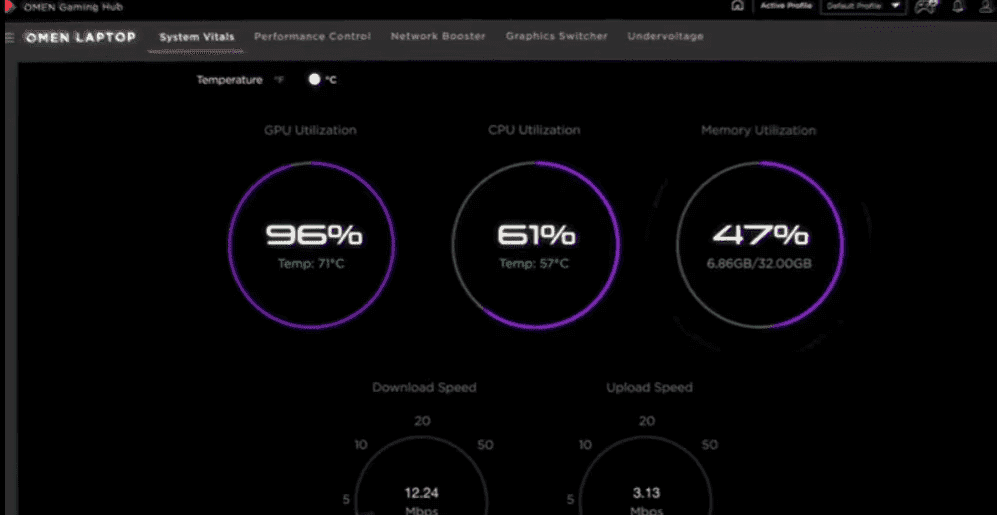
The OMEN Gaming Hub transforms raw hardware power into competitive advantage through intelligent optimisation and performance monitoring, crucial for New Zealand gamers competing in local and international tournaments.
Key Competitive Features:
-
AI-Powered Optimisation: Automatic performance tuning for specific games
-
Real-Time Monitoring: Track FPS, temperatures, and system performance during gameplay
-
Game Launcher Integration: Unified access to F2P titles with optimised settings
-
Network Optimisation: Reduce latency and prioritise gaming traffic
Performance Intelligence: The Hub provides insights into system performance that help players understand and optimise their competitive setup, maximising the hardware advantage potential.
Democratising Performance: Cloud Gaming Solutions
Levelling the Playing Field Through Technology
Whilst premium hardware provides undeniable advantages, cloud gaming services integrated into OMEN Gaming Hub offer alternative pathways to high-performance gaming without massive hardware investments—particularly relevant for New Zealand gamers facing higher hardware costs due to geographic isolation.
OMEN Gaming Hub Cloud Integration
Access Without Investment: Through partnerships with services like GeForce NOW, OMEN Gaming Hub provides access to high-performance gaming from virtually any device with a stable internet connection.
Cloud Gaming Benefits:
-
Hardware Democratisation: Play demanding titles on modest hardware
-
Consistent Performance: Access to high-end GPU performance without ownership
-
Cost Accessibility: Competitive gaming without premium hardware investment
-
Instant Access: No downloads, updates, or hardware maintenance required
Requirements and Limitations:
-
Internet Dependency: Requires stable 25+ Mbps connection for optimal experience
-
Latency Considerations: Slight input delay compared to local hardware
-
Service Access: Limited by cloud gaming platform availability and pricing in New Zealand
The Ethics of Hardware Advantage
Fair Play in an Unequal Hardware Landscape
The emergence of hardware-based competitive advantages raises important questions about fairness, accessibility, and the nature of competitive gaming itself—particularly relevant in New Zealand’s smaller gaming market.
The Fairness Debate
Arguments for Hardware Equality:
-
Skill Purity: Competition should focus on player ability rather than equipment quality
-
Economic Accessibility: Premium hardware requirements create barriers for talented players
-
Competitive Integrity: Hardware advantages can overshadow strategic and mechanical skill
Arguments for Hardware Merit:
-
Investment Rewards: Premium equipment represents legitimate competitive investment
-
Professional Standards: High-level competition naturally requires high-level equipment
-
Technological Progress: Hardware advancement drives gaming innovation and improvement
Industry Responses to Hardware Disparities
Developer Mitigation Strategies:
-
FPS Caps: Some games limit frame rates to reduce hardware advantages
-
Input-Based Matchmaking: Separating controller and keyboard/mouse players
-
Skill-Based Systems: Matchmaking algorithms that consider hardware capability
-
Performance Scaling: Graphics options that allow competitive settings on modest hardware
Hardware vs. Skill: Finding the Balance
The Eternal Gaming Equation
Whilst premium hardware provides measurable advantages, the relationship between equipment and competitive success remains complex and nuanced—a reality that New Zealand’s competitive gaming scene exemplifies.
Where Skill Still Dominates
Hardware Limitations:
-
Strategic Understanding: Game knowledge and decision-making remain paramount
-
Mechanical Skill Development: Practice and muscle memory cannot be purchased
-
Adaptability: Responding to changing game situations requires human intelligence
-
Team Coordination: Communication and teamwork transcend individual hardware capabilities
Where Hardware Provides Clear Advantage
Equipment-Dependent Scenarios:
-
Reaction-Based Encounters: Split-second situations where input lag matters
-
Visual Detection: Spotting enemies or details that lower-end systems cannot display
-
Sustained Performance: Maintaining peak performance during extended competitive sessions
-
Multitasking Demands: Streaming, recording, or communicating whilst maintaining game performance
The OMEN Advantage: Removing Hardware Limitations
Focusing on What Matters: OMEN systems eliminate hardware as a limiting factor, allowing players to focus entirely on skill development and strategic improvement rather than fighting system limitations.
Performance Foundation: By providing consistent high performance, OMEN hardware enables players to concentrate on the aspects of gaming that truly matter: strategy, mechanics, and continuous improvement.
The New Zealand Gaming Landscape
Adapting to Local Competitive Realities
New Zealand’s unique position in the global gaming market presents both challenges and opportunities for competitive F2P gaming. Higher hardware costs due to import duties and geographic isolation mean that understanding hardware advantages becomes even more critical for budget-conscious Kiwi gamers.
Local Competitive Considerations:
-
Tournament Infrastructure: Growing esports scene requires consistent high performance
-
International Competition: Competing against players with premium hardware globally
-
Network Advantages: Local server access benefits from optimised hardware
-
Cost Considerations: Making informed decisions about hardware investments
The rise of F2P titles has democratised access to competitive gaming in New Zealand, but the hardware requirements for peak performance remain significant. HP’s range of gaming solutions addresses these challenges with performance-focused systems designed for the competitive gaming market.
Conclusion: Navigating the New Competitive Landscape
The relationship between hardware and competitive advantage in F2P gaming represents a fundamental shift in how we understand fair play and competitive integrity. For New Zealand gamers, this reality presents both challenges and opportunities in the evolving competitive landscape.
Key Insights:
-
Hardware Reality: Premium gaming systems provide legitimate competitive advantages in F2P titles
-
Accessibility Solutions: Cloud gaming and optimisation software help democratise high-performance gaming
-
Skill Primacy: Whilst hardware matters, strategic understanding and mechanical skill remain paramount
-
Industry Evolution: Developers and platform providers actively work to balance hardware disparities
-
Local Adaptation: New Zealand’s gaming market requires strategic hardware decisions
The OMEN Approach: Rather than simply selling premium hardware, OMEN provides comprehensive solutions that include optimisation software, cloud gaming access, and performance intelligence tools that help players maximise their competitive potential regardless of their starting point.
The Bottom Line: In the modern F2P gaming landscape, hardware advantage is real and measurable. However, intelligent approaches to hardware selection, software optimisation, and alternative access methods ensure that competitive gaming remains accessible to dedicated players willing to invest in their improvement—whether through equipment, skill development, or both.
Understanding this new reality empowers New Zealand gamers to make informed decisions about their competitive gaming journey, whether that involves investing in premium hardware like the OMEN 35L Gaming Desktop or utilising alternative solutions to level the playing field.
Ready to Compete at Your Best?
Explore how OMEN gaming PCs and the OMEN Gaming Hub can provide the performance foundation needed for competitive F2P gaming success in New Zealand and beyond.
Recent Posts


Popular Posts


Products purchased through this store are sold and fulfilled by Ingram Micro (NZ) LTD

CONTACT US
Call us
- Sales
- 0800 854 848
- Technical support
- +64 9884 8600
Mon-Fri 9.00am - 6.00pm
(exc. Public Holidays)
Chat with us
- Our specialist are here to help
- Live chat
Mon-Fri 9.00am - 6.00pm
(exc. Public Holidays)
Submit feedback
We value your opinion!