|
|
Ireland-English | |
|
|
 |
|
20 years LaserJet – proven satisfaction
The forces that shaped a print revolution |
|
|
Twenty years ago HP introduced the LaserJet and ThinkJet printers, a pair of understated siblings that paved the way for a new print revolution. The pure point of origin of any technology is always hard to pin down. The journey of the laser printer is no exception. By most historical accounts, its modern genesis begins in 1938 with a printing process called electrophotography, later renamed xerography ("dry writing"). Both the laser printer and the photocopier share this common ancestor and both use electrostatic energy to transfer dry ink to a page. The main difference between the two processes is in the way the images are written on the light-sensitive drum. In the case of laser printing, the copier's lamp is substituted with a beam of laser light. By the 1970s, laser was the heir apparent technology for the next generation of computer print output. The first commercial laser printers were big, prohibitively expensive machines that produced high quality print. Laser for personal desktop publishing seemed light-years away, if possible at all.
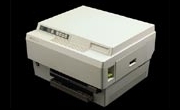
When the first HP LaserJet was introduced in May of 1984, it created a totally new mainstream office printer market.
Although there were other laser printers around, none possessed the complete set of market requirements customers wanted in a desktop printer, namely: speed, flexibility, high-quality printing, a small footprint and affordability. The LaserJet immediately began garnering high praise from the industry and customers alike. Its introduction and subsequent success broke the computer system mold in which computers and printers were purchased as part of an integrated, high-end package focused on direct sales to the large end user. In another step towards a more democratic form of computing, HP introduced the ThinkJet in April of 1984 — five years after the initial bubble-generation experiments took place at HP Labs. The price was US$495. It was clear that the personal computer market was going to grow and that individual computer users would soon be clamoring for high-quality printers that would combine text, graphics and even photographic capabilities. In other words, a massive market was about to open up. Fulfilling one of the most fundamentally held operating principles of the company — to bring breakthrough products to market that make a real contribution — HP executives decided to adopt the emerging PC business model for both of these new print technologies. By making these new printers compatible with most PCs, HP set the standard for the PC print market that would follow.
Each basic LaserJet platform revision offered greater capability at lower prices than its predecessor in keeping with the HP mantra: more for less.
Sales of the LaserJet took off like a rocket, and this original LaserJet was on the path to becoming HP's most successful single product ever. “The key factors behind the early success of LaserJet printers were: they were quiet and quick, they delivered quality printing and they offered full graphical functionality,” explained David M Ritchie, supplies category manager, HP Imaging and Printing Group. With the introduction of the LaserJet IIP in 1989, HP delivered the first "personal" LaserJet. The IIP was half the size and half the speed of previous products but it still had all the print quality, reliability, paper-handling, font and graphics capabilities of its predecessors - and priced US$1,000 less. Truly personal laser printing had arrived. In 1990, HP launched the DeskJet 500 (priced at US$729) based on the latest inkjet technology. It soon became the best-selling printer in the world. A year later, the HP DeskJet 500C added the option of high-quality color.
The rapid pace of HP innovation continued on into the next decades, with each new model helping to write another chapter in one of the truly great success stories of the evolution of print. The HP LaserJet attained universal recognition as a leading brand name in the consumer market for desktop printers. In 2002, HP introduced the Color LaserJet 2500, its first sub-US$1,000 color LaserJet printer and in 2003, the company marked the shipment of its 75 millionth LaserJet printer. By the spring of 2004, HP had shipped 228 million inkjet printers and remains the worldwide market leader in inkjet printing. Ultimately though, the genesis of HP's inkjet and LaserJet printers is the story of how a pair of remarkable printers helped HP write the history of a second revolution in print — one that placed the power of print directly in the hands of a waiting world.
|
|||||||||||||||||||||||||||||||||||||||||||||||||||||||||||
 Printable version Printable version |
|
|
|
|
|
|||||||||||||||
|
|||||||||||||||